
Drainage and Waterproofing
Keep Water Moving Away From Your Slab
Water pooling by the foundation, soggy beds after rain or gaps opening along the slab in summer? Call us and request a free estimate.
- Slab and pier and beam homes
- Written estimate before work
- Cause-first recommendations
Get your free estimate
Tell us what's going on. We call you back fast.
Why Drainage Matters for Tyler Slab Homes
Most foundation movement starts with water, either too much of it in one spot or too little of it during a dry spell. Around Tyler, the red sandy clay and the expansive clay layers below it react strongly to both. Wet soil swells and lifts part of the slab, while dry soil shrinks and lets another part settle. Good drainage will not stop the weather, but it keeps those swings smaller and more even around the whole house.
Waterproofing on a slab home is different from basement waterproofing in colder states. There is no below-grade wall to seal here. The goal is to move roof water and surface water away from the perimeter, keep it from soaking one side of the house, and keep the soil under the slab at a steady moisture level all year.
East Texas weather makes this harder than it sounds. Heavy spring storms drop a lot of rain fast, then long hot summers and drought cycles dry the ground until cracks open along the foundation. Tall pines and oaks near the house pull even more moisture from one side.
Drainage Fixes We Install Around Tyler Homes
Every lot drains a little differently, so we start by watching where water goes during and after rain. Most drainage plans in Tyler use a few of the fixes below, sized to the yard and the problem.
Gutters and Downspout Extensions
A roof sheds a large volume of water in a storm, and a downspout that empties next to the slab soaks one corner of the foundation. We add or repair gutters and carry downspouts several feet out, or into buried lines that release the water well away from the house.
Grading and Swales
Soil should fall away from the foundation, not toward it. Over time beds settle, mulch builds up and new patios change the flow. We regrade the perimeter and shape shallow swales so surface water heads to the street or yard instead of the slab edge.
French Drains
Where water collects on a low side of the lot or seeps in from a neighbor's yard, a French drain gives it a path out. It is a gravel-filled trench with perforated pipe, wrapped in fabric, that carries water to a safe outlet.
Even Soil Moisture Around the Slab
Clay soil causes the least trouble when its moisture stays steady. We explain how to water the foundation perimeter evenly during droughts, using soaker lines set a short distance from the slab, so one side does not shrink while another stays wet.
Root Barriers
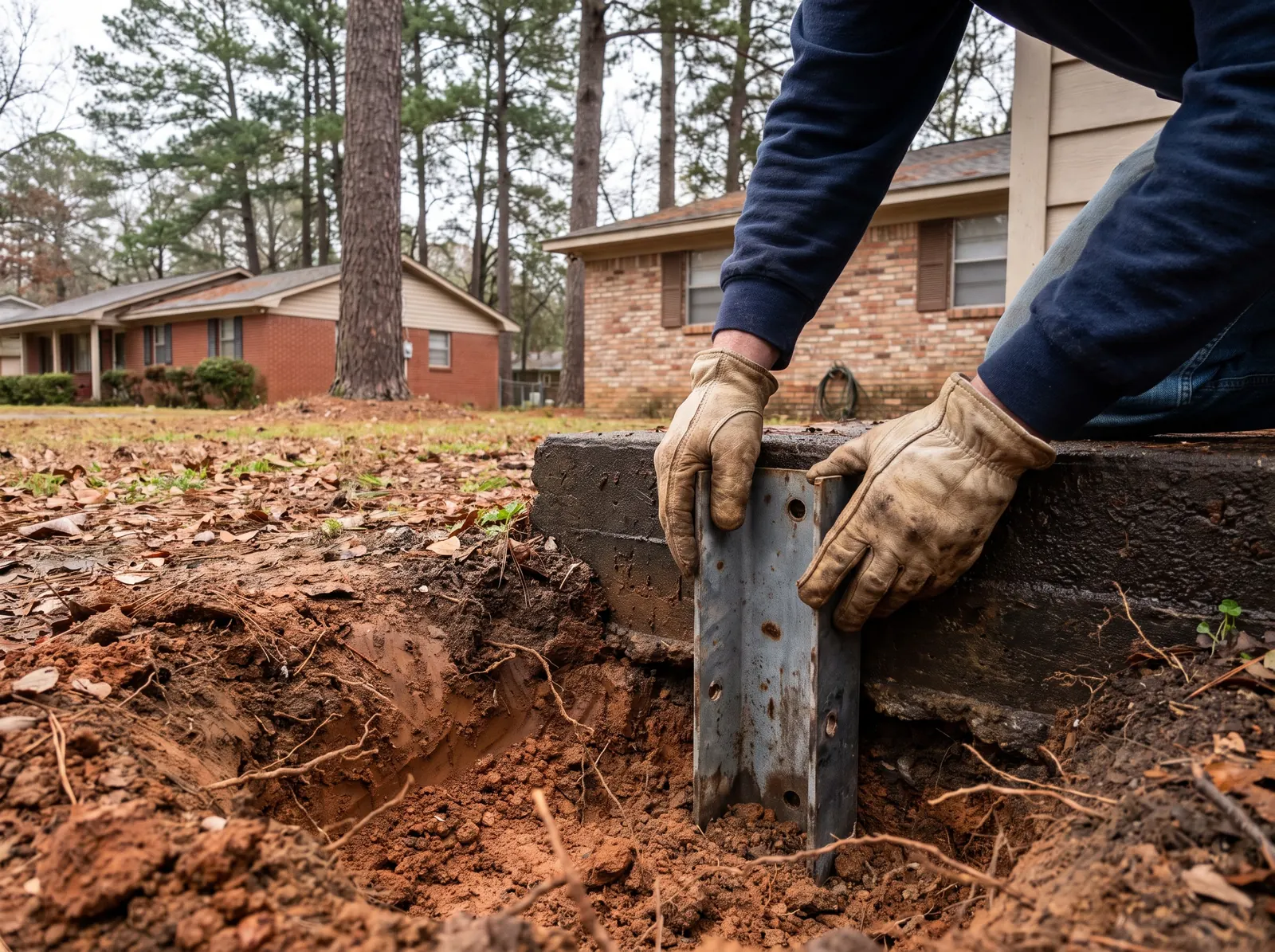
Large pines and oaks can draw a lot of water from the soil under a nearby corner of the house. A root barrier is a vertical panel set in a trench between the tree and the foundation that redirects roots downward and away, often without removing the tree.
Pricing
What Foundation Drainage Work Costs
| Repair type | Typical range | What moves the price |
|---|---|---|
| Downspout extensions and buried lines | $300 – $1,500 | Number of downspouts, length of the runs, outlet location |
| French drain or regrading | $1,500 – $6,000 | Length of drain, depth, soil, access for equipment |
| Root barrier | $1,000 – $4,000 | Length and depth of trench, tree size, utilities in the way |
| Exterior waterproofing | $5,000 – $15,000+ | Size of the home, depth of work, existing landscaping and flatwork |
| Engineer's report (if needed) | $400 – $1,000 | Paid to the engineer; scope of the evaluation |
These are typical ranges for planning only, not quotes. Your price depends on the size of the lot, the soil, how far water has to travel and what is in the way, such as patios, utilities and trees. Drainage work is often the least expensive way to slow foundation movement, so we look at it early. You get a written estimate before any work starts.
How it works
How a Drainage Project Works
- 1
Call and describe what you see
Tell us where water collects, which corners stay wet and whether you have noticed cracks or sticking doors. Photos taken during or after rain are very useful.
- 2
Site walk
We check grading, gutters, downspouts, trees and flatwork, and look at the foundation for signs of movement linked to water.
- 3
Drainage plan and estimate
You get a written plan showing what we propose, where the water will go and what each part costs.
- 4
Installation
We install the agreed drains, extensions, grading or barriers and call in utility locates before any digging.
- 5
Walkthrough and care tips
We show you the finished work, where each outlet is, and how to keep the soil moisture steady through dry months.
Why Choose Us for Foundation Drainage and Waterproofing?
We look at the whole lot
A drainage problem on one side of the house can come from a neighbor's yard, a driveway or a roof valley. We follow the water before we decide what to build.
Drainage before piers when it fits
If better drainage and steady soil moisture can slow minor movement, we say so. We do not push piers on a home that does not need them.
Work that fits the yard
We plan trenches and outlets around beds, trees and flatwork, and we put back the soil and sod we disturb.
A written scope first
You see where every line, drain and barrier goes and what it costs before anything is dug.
Questions
Foundation Drainage and Waterproofing FAQ
Can drainage alone fix my foundation?
It depends on how much the slab has already moved. Drainage and steady soil moisture can slow or stop minor movement, but a slab that has settled noticeably usually needs piers to lift and support it. In many homes the best result comes from both.
Do I have to remove a large tree near my house?
Not always. A root barrier can redirect roots away from the foundation and is often a better first step than removing a healthy tree. Removing a large tree can also change soil moisture suddenly, so we talk through the options with you first.
Why does water stand next to my slab after rain in Tyler?
Usually the soil around the house has settled or was never graded to fall away, or a downspout empties too close. Red clay drains slowly, so standing water lingers. Regrading and moving roof water farther out usually solves it.
Foundation Drainage and Waterproofing Across Texas
We handle foundation drainage and waterproofing in these communities:
Need Foundation Drainage and Waterproofing in Tyler?
Water pooling by the slab or soil pulling away in summer? Call us and we will set up a free estimate.